The Price of Plastic: A Plastic Recovery Certificate Solution for Indonesia’s Circular Economy
July 8, 2026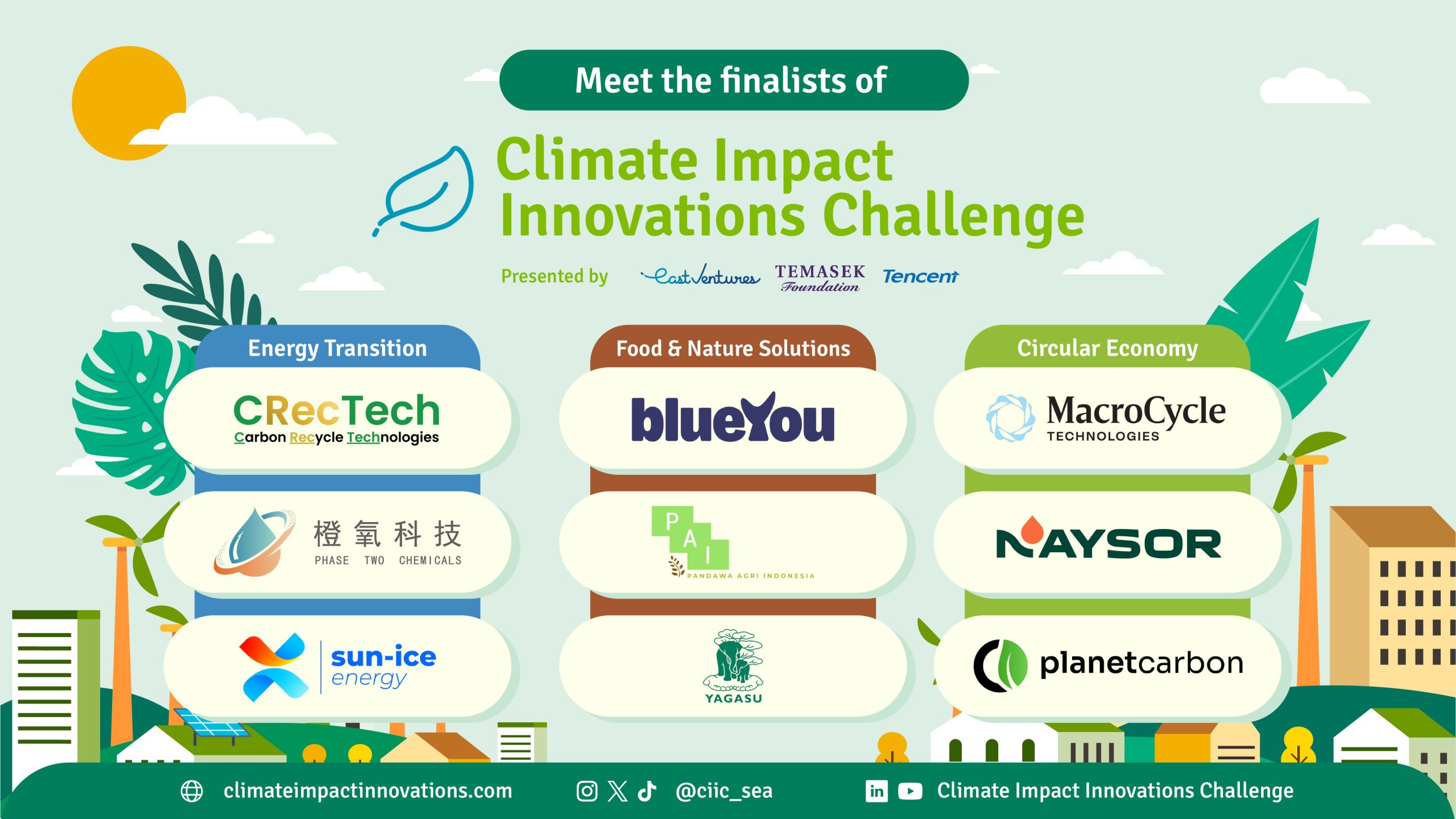
Nine finalists of Climate Impact Innovations Challenge 2026 to compete for Rp15 billion to advance Indonesia’s climate solutions
August 31, 2026
One Soil Does Not Fit All: Reimagining Soil Restoration for an Unpredictable Climate
Written by Shendy Krisdayanti
Soil degradation is no longer merely an environmental issue. Today, up to 40% of the world's land is already degraded, affecting more than three billion people and costing the global economy US$878 billion annually.1,2 In Southeast Asia alone, nearly 22% of land has experienced degradation, threatening the foundation of regional food production. Climate change is making this challenge increasingly difficult to manage. Drought, extreme rainfall, and rising salinity are making degraded soils even harder to restore. The consequences are also felt in agriculture and food security, for example, rice yields across Southeast Asia are projected to decline by around 10% for every 1°C increase in daily maximum temperature. As soils become less productive and more vulnerable to climate change, food security risks are likely to intensify across the region. However, many restoration efforts continue to follow the same approach regardless of local conditions. Across tropical regions, heavy rainfall accelerates erosion, while extended dry periods reduce soil moisture and biological activity. In many coastal agricultural areas, sea-level rise also drives saltwater intrusion, making it harder for crops to absorb water even when soils appear wet. Future food security will depend not only on restoring degraded land, but on ensuring that restoration strategies can respond to changing environmental conditions. As climate pressures continue to reshape agricultural landscapes, restoration can no longer rely on one solution: One soil does not fit all.
If climate change is making soils increasingly unpredictable, then restoration should no longer be designed for stability, it should be designed for resilience. For decades, agricultural systems have focused on maximising productivity, often assuming that environmental conditions would remain relatively stable. However, as environmental conditions become less predictable, long-term productivity increasingly depends on a soil’s ability to withstand change. Climate impacts on agriculture alone could reduce the region’s GDP by 6% by the end of the century. This requires a shift from pursuing short-term gains to strengthening long-term adaptability. One possible innovation is the Soil Resilience Shield, a climate-responsive soil restoration system built around a biodegradable matrix derived from marine biowaste-based chitosan. Instead of focusing on maximising productivity under ideal conditions, the system is designed to help soils remain functional when environmental conditions become less predictable. This shift is important because degraded soils cannot support long-term productivity if they are unable to cope with recurring environmental disturbances. The matrix could be applied directly to degraded agricultural soils as a biodegradable amendment layer. Once incorporated into the soil, the chitosan-based structure helps regulate water and nutrient dynamics while supporting biological processes that are often disrupted by climate change. The material gradually decomposes over time, strengthening soil resilience without creating long-term environmental residues. Unlike conventional fertilisers, which primarily aim to increase crop growth, the matrix is designed to support soil stability when drought, salinity, or intense rainfall affect soil conditions. During droughts, the matrix helps retain moisture within the root zone and releases it gradually as conditions dry. Previous studies have shown that chitosan-based hydrogels have demonstrated water absorption capacities exceeding 80%, can improve water-use efficiency under drought conditions and enhance nutrient retention through their natural binding properties. Research has also demonstrated their ability to reduce the effects of salinity and help soils remain biologically active in challenging environments. When rainfall increases, the matrix helps retain nutrients that would otherwise be washed away.
The chitosan used in the matrix is sourced from marine biowaste, an underutilised byproduct of the seafood industry. Using this material creates a benefit for both waste management and climate adaptation. Rather than being wasted, these materials can be repurposed to support the recovery of degraded agricultural soils. As soil conditions improve, the land becomes better able to retain water, cycle nutrients, and sustain the biological activity that underpins agricultural productivity. For farmers, healthier soils provide more reliable growing conditions as rainfall patterns and temperatures become increasingly uncertain. The use of marine biowaste may also reduce restoration costs while giving new value to resources that are frequently treated as waste. This is particularly important in Southeast Asia, where agricultural systems are becoming increasingly vulnerable to climate-related disruptions.
These innovations also reflect the goals of the Climate Impact Innovations Challenge 2026, particularly within the Food and Nature Solutions track. By combining climate adaptation, ecosystem restoration, and circular resource use, the Soil Resilience Shield addresses multiple environmental challenges through a single intervention. As climate conditions become less predictable, soil restoration can no longer be designed around environmental stability. Future food security will depend on restoration strategies that recognise a simple reality: one soil does not fit all.
Shendy Krisdayanti is a runner-up of the Climate Impact Innovations Challenge 2026 Article Competition.