SEABLOCK-BIO: The Green Revolution in Restoring Indonesia’s Seagrass Meadows
July 1, 2026
Indonesia’s Grid Fragmentation: Why HVDC Transmission Is The Key to Clean Energy Transition
July 3, 2026
Seawater-Based Electrochemical Technology for Carbon Capture and Circular Economy in Indonesia
Written by Toman Albert Josua Lumban Tobing
Indonesia is currently accelerating its industrial downstreaming program to increase the added value of natural resources. This program aligns with one of the government's missions to process all of the country's raw materials into products with utility value. However, the acceleration of industrialization brings the consequence of a massive increase in carbon dioxide (CO₂) emissions. According to data from the Global Carbon Project, Indonesia's CO₂ emissions reached around 700 million tons in 2023. These emissions mostly come from coal-fired power plants, cement factories, as well as the metal and petrochemical processing industries. The accumulation of CO₂ in the atmosphere not only triggers global climate change but also has a direct impact on air quality and human health. Prolonged exposure to high concentrations of CO₂ in humans can disrupt the acid-base balance of the blood and reduce cognitive function. On the other hand, about one-quarter of anthropogenic CO₂ emissions are absorbed by the ocean, which will cause seawater acidification that threatens coral reef and plankton ecosystems. This problem is a real challenge that must be addressed, especially within the framework of the transition towards a low-carbon economy.
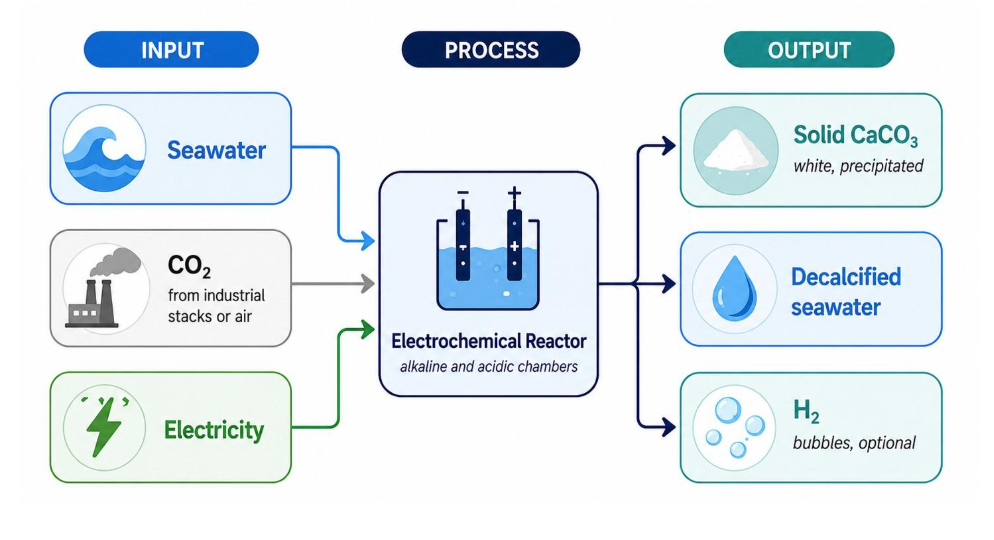
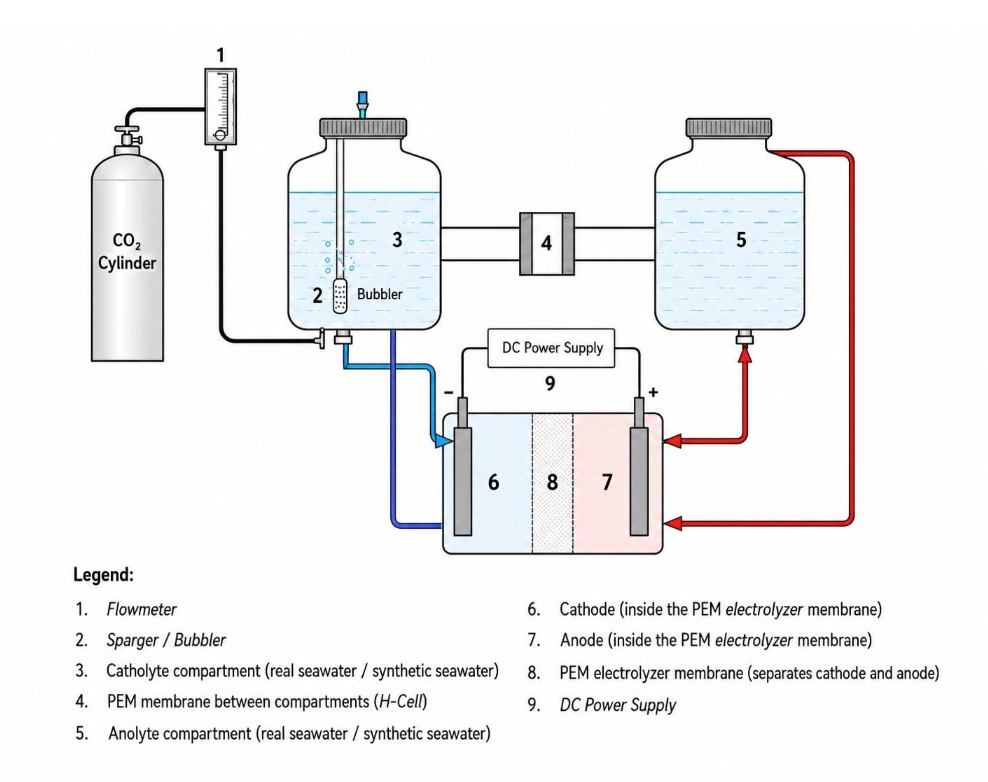
To answer this challenge, an innovative solution is needed that not only captures CO₂ but also generates economic added value. The technology developed in this research utilizes seawater as the main medium for the reaction process. The working principle of this technology is very simple: seawater containing various natural minerals is flowed into a reactor. With the help of an electric current (whether from renewable or non-renewable sources), this reactor creates an alkaline condition that causes dissolved CO₂ in the seawater to turn into solid, insoluble particles. These particles then settle and can be harvested and further processed in various industries.
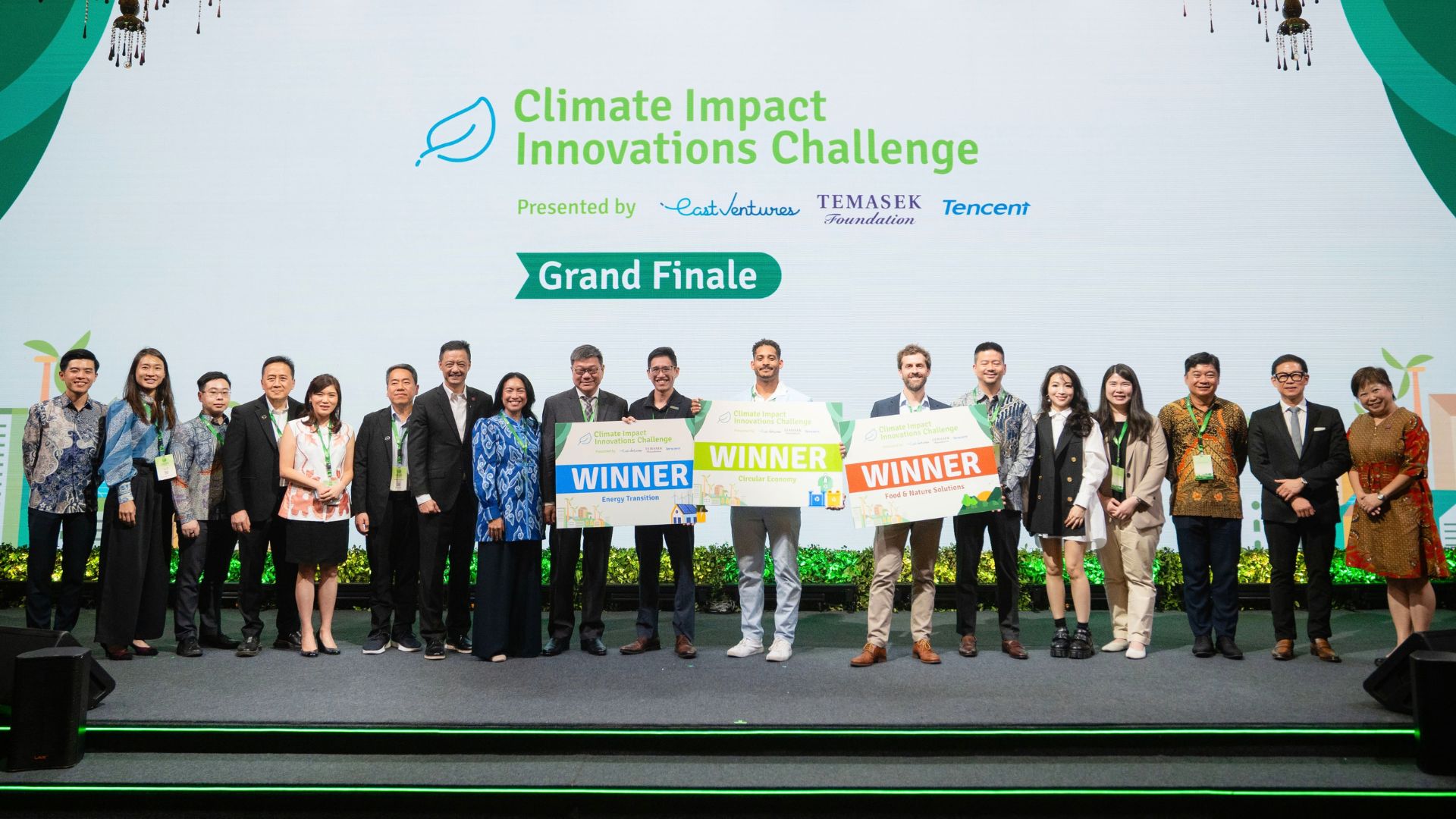
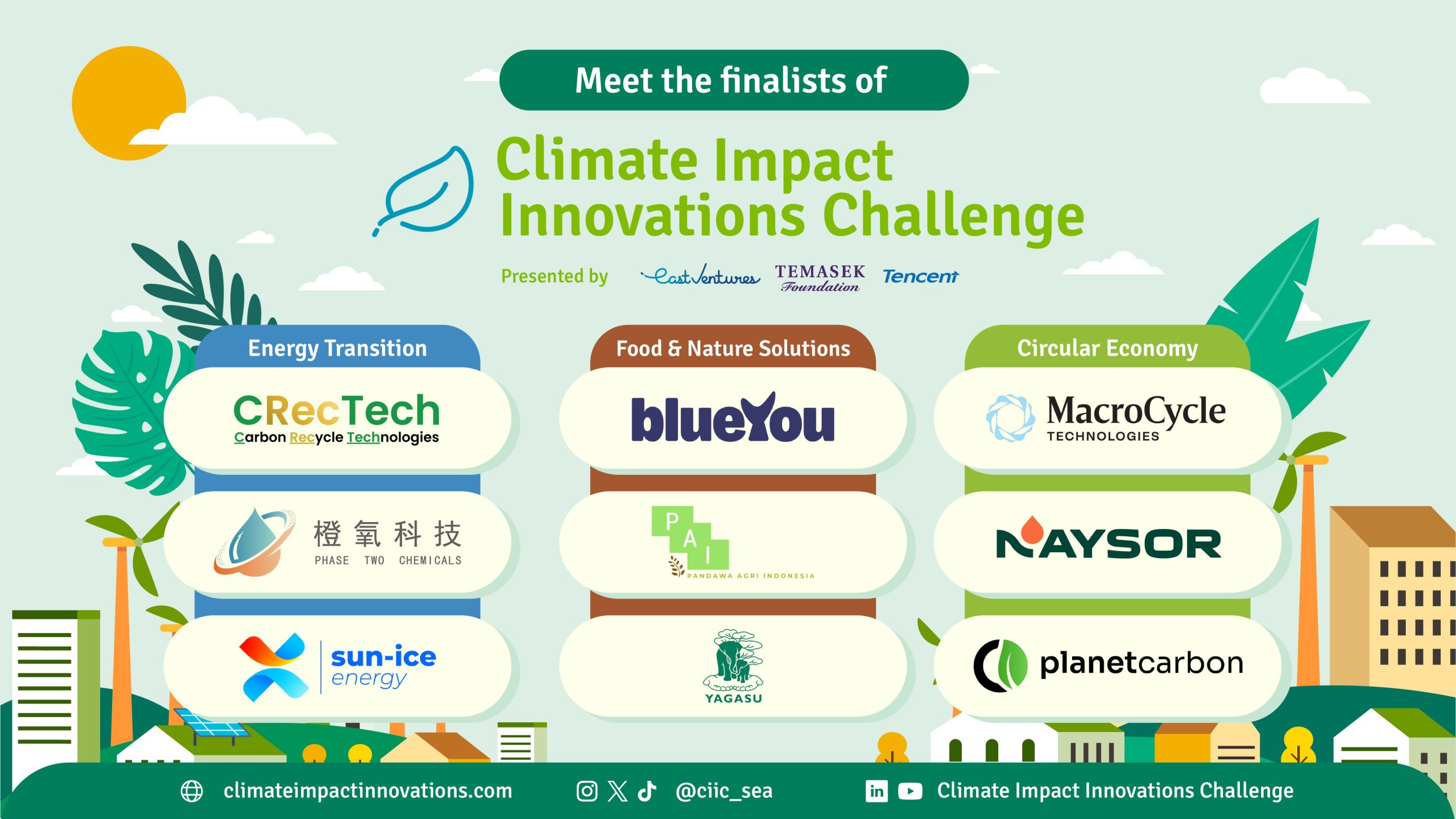
This proposed solution aligns with the mission of the Climate Impact Innovations Challenge (CIIC) 2026, which aims to be a platform for innovators to showcase sustainable technologies in preventing ecological challenges and the impacts of climate change. This technology focuses on the Circular Economy track, where seawater-based CO₂ mineralization technology offers an approach that not only captures carbon but also converts it into value-added products, making it consistent with the principles of a circular economy. Through participation in CIIC 2026, this innovation can receive support for further development, from the laboratory scale towards real-world implementation in the field.
Evidence from various international studies demonstrates the technical feasibility of this approach. Based on publications by Zhao et al. (2020) and Sharifian et al. (2022), a seawater-based electrochemical system can achieve CO₂ capture efficiencies of more than 80% under optimal operating conditions, with an energy consumption of around 0.88 to 1.2 kWh per kilogram of product produced. This figure is much lower compared to Direct Air Capture methods, which can reach 2–10 kWh per kilogram of CO₂. Research by Chen et al. (2021) even reports that with the appropriate process configuration, this system can achieve calcium removal rates from seawater of up to 94% and CO₂ fixation approaching 100%.
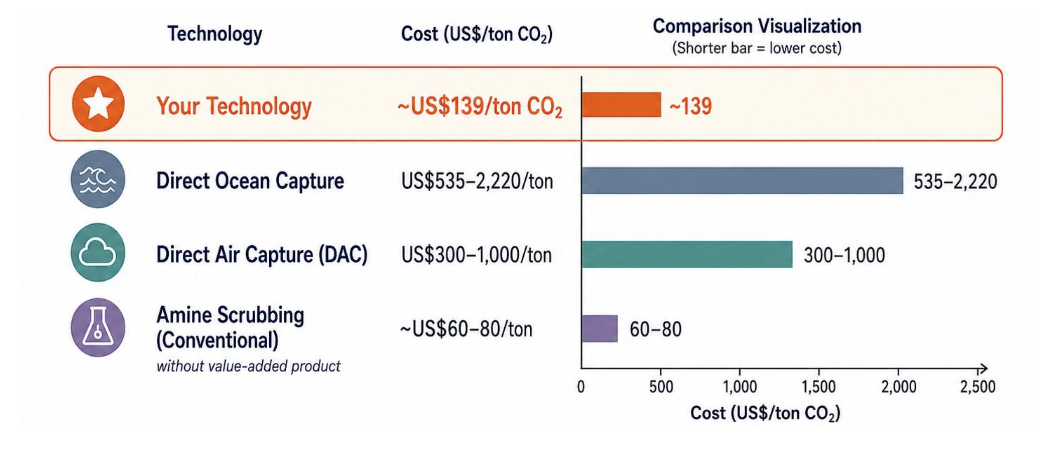
From an economic perspective, this technology also shows very promising prospects. A recent study in the journal Angewandte Chemie (2026) reported that a similar electrochemical mineralization process can operate at a CO₂ capture cost of only around US$139 per ton, much lower than Direct Ocean Capture methods, which range from US$535 to US$2,220 per ton. Even more interestingly, this process produces hydrogen gas as a by-product. According to a US patent, every ton of CO₂ mineralized can generate around 45 kg of hydrogen, with a saleable value of up to US$135 per ton of CO₂. By utilizing this hydrogen, the net production cost of calcium carbonate can be reduced to around US$27 per ton. Several studies, including one published in Applied Catalysis B: Environmental (2024), even conclude that this process has the potential to be economically profitable while also being carbon-negative.
The solid product generated from this process is calcium carbonate (CaCO₃), which is the main raw material for the cement manufacturing industry, constituting 70-80% of the entire cement production process. Calcium carbonate is widely used in the paper, paint, plastic, and pharmaceutical industries. With national cement production capacity reaching around 120 million tons per year, the demand for this raw material is very high. So far, this raw material has been supplied through limestone mining, which often damages karst areas and protected ecosystems. This technology offers an alternative source that does not require mining, while also capturing CO₂ from the environment. Every ton of product generated is equivalent to capturing about 0.44 tons of CO₂ that is permanently locked in mineral form. Another advantage of this technology is the utilization of Indonesia's coastal potential, which has not been optimally harnessed. Large industrial areas such as Cilegon, Gresik, Balikpapan, and Morowali are located on the coast, so the sources of seawater and CO₂ emissions are in the same location. This reduces transportation costs and enables integration with floating renewable energy infrastructure.
Supporting materials
1. Simplification of Process Flowchart of Seawater-based of Mineralization Carbon dioxide
2. Cost Comparison of Each Technology in Capturing CO2
3. Schematic of Seawater-based of Mineralization Carbon dioxide (Lab-scale)
Toman Albert Josua Lumban Tobing is the Circular Economy Track winner of the Climate Impact Innovations Challenge 2026 Article Competition.